
Introduction
Most people learning to write prompts focus on what to ask for. The better question is often how much to say when asking.
Prompt specificity - how much detail and constraint you include - is one of the most practical levers you control as a prompt writer. Too little detail, and the model makes assumptions that may not match your needs. Too much detail and you stack competing constraints that can work against each other.
This article examines prompt specificity in AI prompting as a calibration dial rather than a fixed target. You will see the same task written at three levels of detail, understand what each level typically produces, and learn a practical approach for calibrating your own prompts.
Why Specificity Matters More Than You Might Expect
When a prompt is vague, the model still produces output. It fills the open space with its own assumptions about what you probably want. Sometimes those assumptions are reasonable. Often they are not - and the output, while technically responsive, misses the mark in ways that are hard to pinpoint.
When a prompt is over-specified, a different problem appears. The model tries to satisfy every constraint simultaneously. When constraints conflict or pile up, output quality can drop in unexpected ways. For example, the writing becomes stilted, certain instructions get ignored, or the model satisfies the letter of some rules while breaking others.
Calibration - finding the right level of detail for the task at hand - is the skill that sits between those two failure modes. It is not about maximizing specificity. It is about matching the level of detail to the purpose.
What Prompt Specificity Actually Means
As established in Chapter 3, prompt specificity refers to the amount of detail and constraints a prompt includes. More specificity tends to narrow the range of possible outputs, giving the model less room to interpret. Less specificity leaves more open, which can be useful when variety is the goal - and problematic when consistency matters.
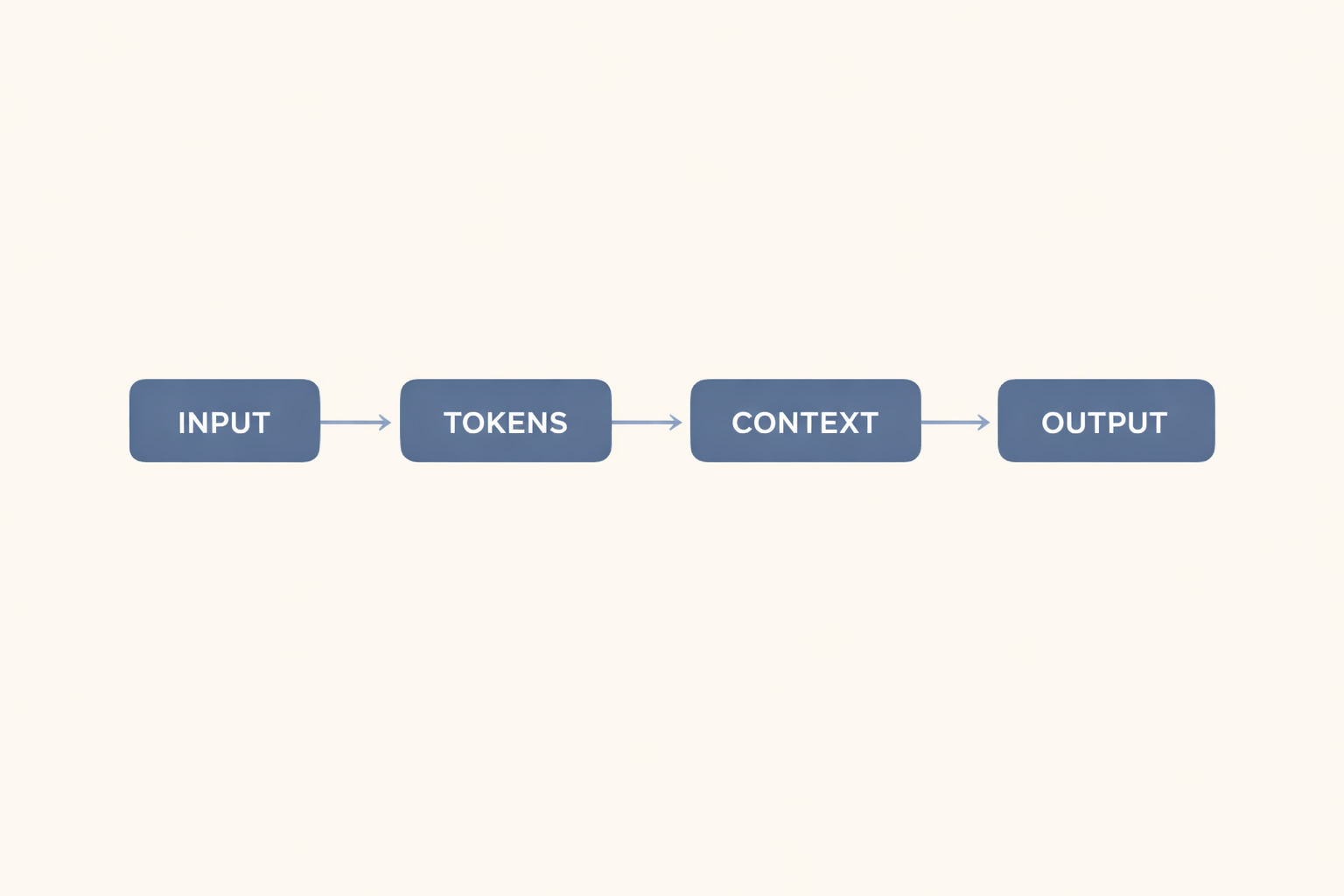
Specificity shows up across all four prompt components introduced in Chapter 3:
- Instruction - how precisely you define the task
- Input - how completely you provide the content to work with
- Context - how much background you supply about audience, purpose, and constraints
- Output Format - how tightly you specify the structure, length, and style of the response
Adjusting specificity in any of these components shifts the prompt. The question is not whether to be specific - it is where specificity adds value and where it introduces friction.
Three Levels of Specificity: The Same Task, Three Ways
The clearest way to understand specificity is to see how the same task reads at different levels. The following three examples use a single writing task - a blog post introduction on project management - written at three levels of detail.
Version 1 - Too Vague
| Prompt | Write something about project management. |
| Expected Output | An essay, a list of tools, a definition, or a motivational paragraph - the model chooses. Output is typically broad and generic, often requiring significant revision to meet specific needs. |
| Note | No task definition, no format, no audience, no tone. The model fills every gap with its own assumptions. |
At this level, the model has very little to anchor the output. It may produce reasonable content, but that content is unlikely to match your actual needs without revision. The core problem is not that the model performs poorly - it is that the prompt gives it nothing specific to perform toward.
Version 2 - Well-Calibrated
| Prompt | Write a 150-word introduction to a blog post about common project management mistakes. The audience is small business owners with no formal project management training. Use a friendly, practical tone. |
| Expected Output | A focused, on-topic introduction that is typically usable with minimal editing. The model has a clear task, format, audience, and tone to work with. |
| Note | Four specificity elements are present: task definition, length, audience, and tone. Together, they narrow the output range in useful ways without creating competing constraints. |
This version gives the model clear signals across the instruction, output format, and context components. In many cases, output produced from prompts at this level requires only light editing - not because the model is more capable at this prompt, but because the prompt reduces the range of acceptable outputs to something close to what you actually need.
Version 3 - Over-Specified
| Prompt | Write a 147-word introduction to a blog post about project management mistakes. Audience: small business owners aged 35-55 with no formal PM training, living in mid-size cities. Use exactly three sentences in the first paragraph. Begin the first sentence with the word "Every." Do not use the word "challenge." Include a reference to time management and budget in the second paragraph. End with a rhetorical question. |
| Expected Output | Outputs may satisfy some constraints while violating others. The writing often becomes stilted. Some instructions get ignored when they conflict with other constraints. |
| Note | Each constraint is reasonable. The problem is the volume. When constraints compete - exact sentence count, exact word count, specific opening word, excluded vocabulary, required topics, and closing structure - the model struggles to satisfy all of them simultaneously. |
Over-specified prompts often produce outputs that feel mechanical. The model may follow the structure while losing the tone, or hit the word count while skipping a required topic. The failure mode is not that the model ignores instructions - it is that no output can satisfy all of them at once.
The Specificity Spectrum at a Glance
The table below summarizes what each level of specificity typically produces. Use it as a reference when reviewing your own prompts.
| Level | Example Prompt | What Tends to Happen |
|---|---|---|
| Too Vague | Write something about project management. | Output is broad and generic. The model fills in assumptions about format, length, tone, and audience. Results often require heavy revision. |
| Well-Calibrated | Write a 150-word introduction to a blog post about common project management mistakes. Audience: small business owners with no formal PM training. Tone: friendly and practical. | Output is focused and typically usable with minimal editing. The model has a clear task, format, audience, and tone to work with. |
| Over-Specified | Write a 147-word introduction about PM mistakes for small business owners aged 35-55 in mid-size cities. Use exactly three sentences in the first paragraph. Begin with the word "Every." Do not use the word "challenge." Include time management and budget in paragraph two. End with a rhetorical question. | Outputs may satisfy some constraints while violating others. The volume of competing rules tends to produce stilted writing or unexpected failures. |
How to Calibrate Prompt Specificity
Calibration is not a one-time decision - it is an iterative process. The goal is to find the level of specificity that yields usable output with minimal revision for the task at hand.
A practical calibration approach follows these four steps.
- Start appropriately specific. Define the task, the audience, and the output format. That combination - instruction, context, and format - covers the most common sources of generic or misaligned output.
- Test the prompt. Run it and read the output critically. Does it match your needs? If not, note specifically what is missing or off.
- Adjust in one direction at a time. If the output is too generic, add one specific element - an audience definition, a length, a tone. If the output is stilted or inconsistent, remove one constraint and test again.
- Stop when the output is usable. You do not need to eliminate all variation. You need output that serves your purpose. The right level of specificity is the one that gets you there consistently.
This iterative approach works because prompt specificity interacts differently with different tasks. A creative writing task may benefit from less specificity - leaving room for the model to generate interesting variation. A technical documentation task may need tighter constraints to produce consistent, accurate output. There is no universal target.
Calibration Across Different Task Types
The right level of specificity varies by domain. The examples below show the same calibration principle applied across two different task types.
Business Writing Task: Meeting Summary
| Prompt | Summarize the following meeting notes into a short executive update. Audience: senior leadership who did not attend. Focus on decisions made and next steps. Format: three bullet points, one sentence each. |
| Expected Output | A concise, focused summary with three clear bullet points covering only decisions and next steps. |
| Note | Four specificity elements do the work here: task (summarize), audience (senior leadership), focus filter (decisions and next steps), and format (three one-sentence bullets). Removing any one of them typically widens the output range. |
Creative Writing Task: Email Subject Line
| Prompt | Write five subject line options for a customer re-engagement email. The offer is 20% off. The tone should be friendly, not pushy. |
| Expected Output | Five varied subject line options, each friendly in tone and referencing the discount in different ways. |
| Note | Here, a less constrained output format is intentional - five options with variety is the goal. Over-specifying the structure of each subject line would undermine the purpose of generating alternatives. |
Common Specificity Mistakes and How to Fix Them
Mistake 1: Vague Instruction, Specific Format
This is one of the most common imbalances. The format is defined ("write a 200-word paragraph"), but the task is unclear ("about marketing"). The model fills the content gap with generic material because the instruction gave it nothing specific to produce.
The fix: Match instruction specificity to format specificity. If you specify a format in detail, also specify the task, audience, and purpose at the same level of detail.
Mistake 2: Stacking Constraints Without Testing
Adding constraint after constraint without testing the result often produces the over-specified failure mode. Each constraint seems reasonable in isolation; the combination creates competing requirements that the model cannot fully satisfy.
The fix: Add constraints one at a time and test after each addition. Stop when the output is usable. You do not need every constraint you can imagine - only the ones that actually improve the output.
Mistake 3: Treating Specificity as a Substitute for Iteration
Some writers front-load every detail into a single, highly specific prompt in the hope that it will produce a finished result without further work. In many cases, this approach produces worse results than a well-calibrated starting prompt followed by targeted follow-up prompts.
The fix: Treat your first prompt as a starting point. Use follow-up prompts to refine. Iteration is a normal part of effective prompting - not a sign that the first prompt failed.
Key Takeaways
- Prompt specificity in AI prompting is a calibration dial, not a target to maximize. Both too little and too much specificity create problems.
- Vague prompts leave the model filling gaps with assumptions that may not match your needs. Output tends to be broad and often requires significant revision.
- Over-specified prompts stack competing constraints. When constraints conflict, outputs often become stilted or inconsistent, with some instructions ignored.
- A well-calibrated prompt defines the task, the audience, and the output format - then stops. Additional constraints should be added only when they demonstrably improve the output.
- Calibration is iterative. Start with an appropriately specific prompt, test it, and adjust in one direction at a time.
What to Do Next
Take a prompt you have written recently that did not produce the output you needed. Identify which level it sits at - too vague, well-calibrated, or over-specified. Then adjust one element and test again.
If you are working through the Chapter 3 material, the next article in this series examines how the same four structural components apply across text, image, and code tasks - a useful follow-on to the specificity concepts covered here.


0 Comments